


If you are missing several teeth or facing the possibility of losing an entire arch of teeth, dental implants can offer a long-term solution that looks and functions more like natural teeth. But as you begin researching your options, you may come across several different approaches to implant treatment, including traditional dental implants and All-on-4 dental implants.
While both systems use dental implants to support replacement teeth, they are designed for different situations. Understanding how these treatments compare can help you have a more informed conversation with your dentist about which approach may best fit your oral health, goals, and lifestyle.
At Smiles on X in Southwest Ranches, FL, implant treatment is customized to each patient’s needs. Our practice provides single dental implants, implant dentures, and full-arch solutions, including “teeth in a day,” with advanced digital treatment planning and an in-house dental lab.
What Are Traditional Dental Implants?
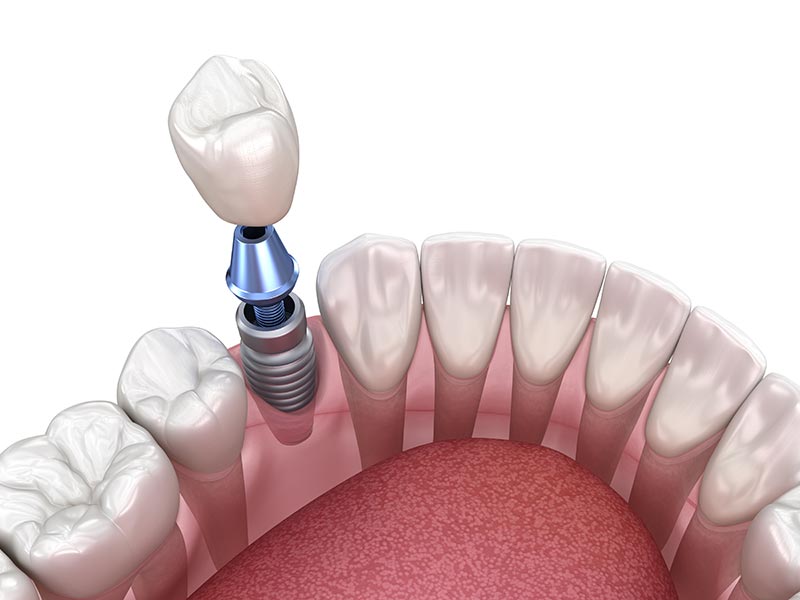 A traditional dental implant is designed to replace an individual missing tooth. The implant itself is a small post, typically made from titanium or another biocompatible material, that is surgically placed into the jawbone.
Once the implant integrates with the surrounding bone, it can support a dental crown that replaces the visible portion of the missing tooth.
For example, if you are missing one tooth between two healthy teeth, an individual dental implant can replace that tooth without requiring the neighboring teeth to be reduced for a traditional dental bridge.
Traditional dental implants can also be used to support bridges or implant dentures when multiple teeth are missing. The number and placement of implants depend on each patient’s anatomy and treatment plan.
Benefits of Traditional Dental Implants
Traditional implants may be a good option when you:
- Are replacing one or a few missing teeth
- Have adequate bone to support implant placement or are a candidate for bone grafting
- Want an independent replacement for an individual tooth
- Need an implant-supported bridge or denture
- Prefer a treatment plan designed around specific missing teeth
Because dental implants are anchored in the jawbone, they can provide stability while also helping maintain the bone that surrounds a missing tooth.
What Are All-on-4 Dental Implants?
All-on-4 dental implants are a type of full-arch implant treatment designed to support a complete set of replacement teeth using a strategically planned number of implants.
Rather than placing one implant for every missing tooth, the treatment uses four implants to support a full arch of replacement teeth in appropriate candidates. The implants are positioned to maximize available bone and provide a stable foundation for the restoration.
This approach can be particularly appealing for people who are missing most or all of the teeth in an upper or lower arch, or for patients whose remaining teeth are severely compromised and may not be suitable for long-term preservation.
The exact number of implants and the design of the final restoration depend on the patient’s individual anatomy and treatment needs. Despite the name “All-on-4,” not every full-arch implant case follows exactly the same protocol.
All-on-4 vs. Traditional Implants: What’s the Difference?
The biggest difference comes down to what the implants are being used to replace.
Traditional dental implants are commonly used to replace individual teeth or support smaller restorations. All-on-4 is a full-arch concept intended to replace an entire upper or lower arch of teeth with an implant-supported restoration.
Number of Implants
With traditional implant treatment, the number of implants varies according to how many teeth are missing and the type of restoration being used. With an All-on-4 approach, four strategically positioned implants can be used to support a full-arch restoration in appropriate patients.
More implants are not automatically better, and fewer implants are not automatically better. Your implant dentist at Smiles on X will help you choose the appropriate treatment based on your bone anatomy, bite, overall oral health, and the type of restoration being planned.
Treatment Scope
Traditional implants are often suited to localized tooth loss. All-on-4 is intended for more extensive tooth loss involving an entire arch.
For someone missing a single tooth, an All-on-4 treatment would not make sense. Conversely, someone with extensive tooth loss may benefit from discussing a full-arch implant solution rather than replacing each tooth individually.
Restoration Type
An individual implant is usually topped with a crown designed to replace one tooth.
An All-on-4 treatment supports a full-arch prosthesis designed to replace an entire row of teeth.
The result is a different type of restoration, even though both treatments rely on dental implants for support.
What Are the Benefits of All-on-4 Dental Implants?
For appropriate candidates, full-arch implant treatment can offer several advantages.
A Stable Alternative to Traditional Dentures
Traditional removable dentures rest on the gums and can move during eating or speaking. Implant-supported teeth are anchored to dental implants, providing a more stable foundation.
Replacement of an Entire Arch
Instead of developing separate treatment plans for each failing or missing tooth, a full-arch approach can address extensive tooth loss as one comprehensive treatment.
Strategic Implant Placement
All-on-4 treatment is designed around the patient’s available bone and anatomy. In some cases, the approach may allow a patient with significant bone loss to be considered for an implant-supported full arch without the same type or extent of bone grafting that might otherwise be necessary. However, this is highly case-dependent and cannot be assumed for every patient.
Potentially Streamlined Treatment
Some full-arch implant protocols allow patients to receive a temporary set of teeth during the treatment process. Smiles on X offers “teeth in a day” solutions as part of its implant services, although the specific timeline depends on the patient’s clinical situation.
What Are the Benefits of Traditional Dental Implants?
Traditional dental implants offer their own advantages.
If you are missing only one or a few teeth, individual implants allow treatment to be focused exactly where it is needed. They can also preserve more of your existing healthy teeth because an individual implant does not require neighboring teeth to serve as supports.
Traditional implants may also provide greater flexibility for patients whose tooth loss is limited or whose treatment needs vary throughout the mouth.
Is All-on-4 Better Than Traditional Dental Implants?
The goal isn’t to determine which treatment is universally “better.” It is to determine which treatment is appropriate for your particular situation.
If you have one missing tooth, an individual dental implant may be the most logical solution.
If you have several missing teeth, an implant-supported bridge or implant denture may be appropriate.
If you have lost or are expected to lose most of the teeth in an entire arch, an All-on-4 or another full-arch implant solution may be worth discussing.
Your dentist at Smiles on X will consider factors such as:
- Number and location of missing teeth
- Remaining tooth health
- Jawbone volume and density
- Gum health
- Bite and jaw function
- Overall health and healing considerations
- Oral hygiene habits
- Desired appearance and function
- Long-term treatment goals
What If I Don’t Have Enough Bone for Dental Implants?
Bone loss is common after tooth loss because the jawbone no longer receives the same stimulation from tooth roots.
That does not automatically mean you cannot receive dental implants.
Depending on the location and amount of bone available, treatment may include bone grafting or another approach designed to create a more suitable foundation for an implant.
Full-arch treatment may also be planned differently from individual implants because the implant positions can be selected strategically based on the anatomy available.
A comprehensive implant evaluation is the best way to determine what options are realistic for you.
How Long Do Dental Implants Last?
Dental implants are designed to be a long-term tooth replacement solution, but their longevity depends on many factors.
Good oral hygiene, regular dental visits, healthy gums, appropriate bite forces, and avoiding tobacco can all contribute to the long-term health of your implants.
The replacement teeth attached to implants may eventually need repair or replacement due to normal wear, just as natural teeth and other dental restorations can change over time.
Choosing the Right Implant Treatment in Southwest Ranches
Dental implants are not a one-size-fits-all treatment. Whether you need to replace one missing tooth or are considering a full-arch solution, careful planning is essential.
At Smiles on X in Southwest Ranches, FL, patients have access to a range of implant solutions, including single dental implants, implant dentures, full-arch treatment, and teeth-in-a-day options. Our modern dental practice combines digital treatment planning, 3D printing, photogrammetry, an in-house dental lab, and experience with complex implant and bone reconstruction cases to create individualized treatment plans.
If you’re unsure whether traditional dental implants, All-on-4, or another implant-supported solution is right for you, a personalized implant consultation can help you understand your options. The right treatment should not simply replace missing teeth; it should support your oral health, function, comfort, and long-term goals.


